
Some books are simply stories we read. Others stay with us long after we’ve turned the final page and become the starting point for great conversations. Charlotte Brontë’s Jane Eyre is definitely one of those books.
For our first book club meeting, we travelled back to Victorian England to meet Jane, a protagonist who, despite the difficult circumstances of her life, refuses to let her social status, lack of money, or gender determine who she can become.
Our final group rating was 3.5 out of 5, which felt like a fair reflection of our overall experience. We all agreed that the novel has a great deal to offer and explores themes that still feel relevant today. At the same time, not everyone connected with its pace, characters, or some of Brontë’s narrative choices in the same way.
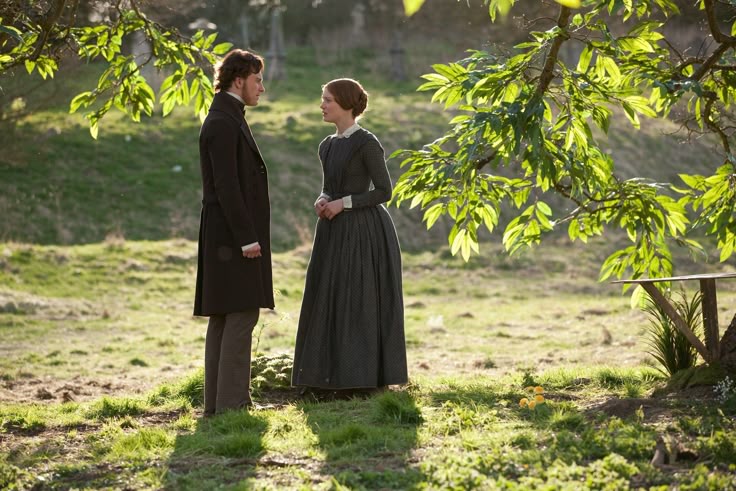
A heroine determined to choose her own path
If there is one thing that stands out in Jane Eyre, it is Jane herself.
She is not a perfect heroine, nor is she someone who quietly waits for another person to come along and save her. From childhood, she shows a strong sense of self and a deep determination to protect her dignity.
Jane is an orphan, she is poor, and for much of her life she depends on others to survive. But she never accepts that these circumstances make her less valuable than anyone else.
Throughout the novel, she moves through very different stages of life: her difficult childhood with the Reeds, her years at Lowood School, her work as a governess at Thornfield Hall, and eventually the decisions she must make about Rochester and her own future.
And throughout all of these experiences, the novel keeps returning to the same question:
How much of ourselves are we willing to give up in order to get what we want?
For Jane, the answer eventually becomes clear: she is not willing to lose her independence, not even for love.
Rochester: the biggest source of debate
Perhaps unsurprisingly, Edward Rochester was one of the characters who generated the most discussion during our meeting.
It is easy to see why he is such a compelling character. He is mysterious, intelligent, sarcastic, and far more complicated than the typical romantic hero. But he is also deeply flawed, and his relationship with Jane raises some difficult questions.
From the very beginning, there is an obvious imbalance of power between them. Rochester is wealthy, he owns Thornfield, and his social position is far above Jane’s.
This led us to one of the central questions of our discussion: can we really see their relationship as one between equals?
Jane certainly tries to create that equality on an emotional and intellectual level. She wants Rochester to see her as a person in her own right—not simply as the governess in his employment.
And perhaps that is one of the most important ideas at the heart of the novel:
Jane wants to be loved, but she does not want to be possessed.

Reading Jane Eyre as a group
Reading a novel like Jane Eyre on your own is one experience. Reading it with other people is something else entirely.
One of the things I love most about book clubs is seeing how differently people can respond to the same story. A character one person finds fascinating might be deeply frustrating to someone else. A decision that seems perfectly understandable from one perspective can become much more complicated when discussed with a group.
In our case, the conversation centred particularly around Jane, Rochester, Bertha, and the idea of independence.
Our discussion of Rochester also allowed us to move beyond the simple question of whether we liked or disliked the love story. Instead, we found ourselves asking what we understand today as a healthy relationship, how economic inequality affects relationships, and to what extent historical context can explain -or perhaps even excuse- certain behaviours.
And that, perhaps, is one of the reasons Jane Eyre continues to be such an interesting novel to read today.
It is not simply a love story. It is also a story about identity, independence, dignity, and the difficult choices we make when love and freedom seem to be pulling us in different directions.
What our book club members had to say:
“I was really surprised by Jane Eyre. I haven’t read any ‘classic’ books before, so I wasn’t sure what to expect. But it was nice. An easy readable book about the life of Jane Eyre. Sometimes it was slow paced (could be boring). This made it also harder for me to keep reading as I wasn’t drawn into the story. But when I had more time, I did manage to get into it more and keep reading. If you have already read some older books from around this time period, you won’t miss too much if you don’t read it. But if you have never read ‘classics’ and want to get into this genre, I would recommend this book as it is a slow, easy to read and relatively shorter book.” – Mayke Boellaard
Next Read
After such an intense novel, it’s time to decide where our literary journey will take us next.
One option that feels particularly fitting after Jane Eyre is returning to the themes of identity and the double with The Picture of Dorian Gray.
It’s a shorter novel, but a perfect choice for continuing to explore how 19th-century literature examines the parts of ourselves that we hide from others—and perhaps even from ourselves.